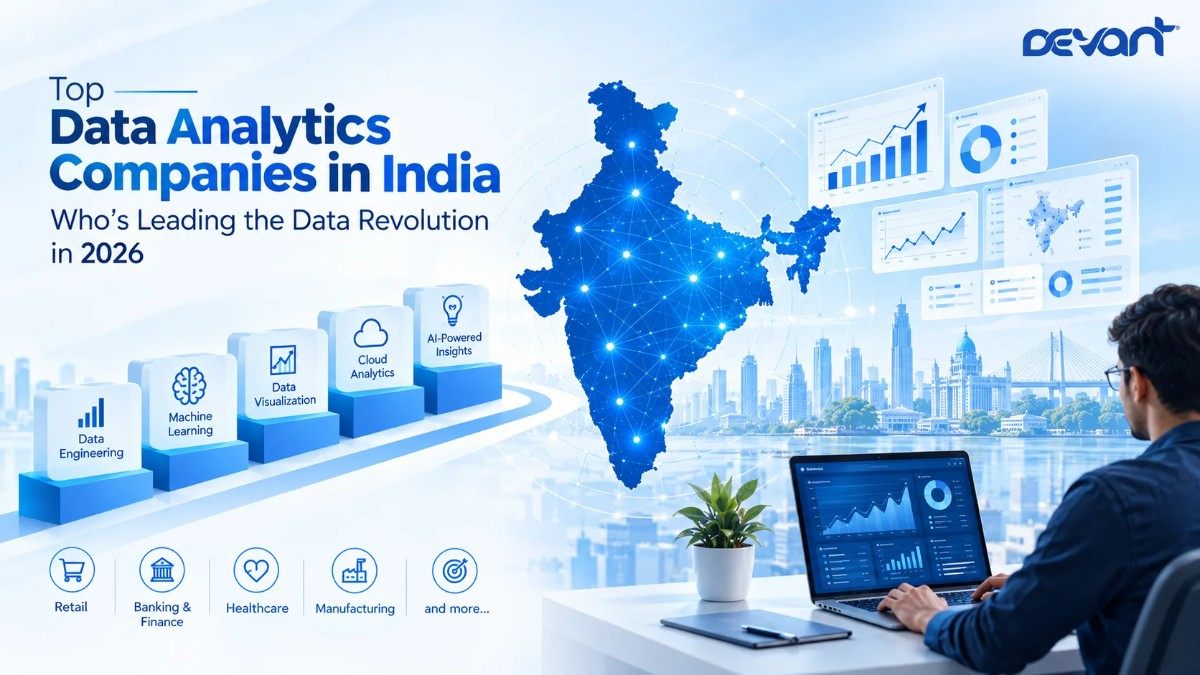


In today's competitive landscape, data is more than just raw information; it's a strategic asset that, when leveraged effectively, can drive unprecedented growth and innovation. Businesses across all sectors are recognizing the imperative to harness their data, leading to a surge in demand for expert data analytics services. But with numerous providers entering the market, how does one identify a truly exceptional data analytics company in India? This guide will explore the essential characteristics, services, and forward-thinking approaches that distinguish the leaders in this dynamic field.
The ability to transform complex datasets into actionable insights is what sets a premier data analytics company apart. It's not merely about collecting data, but about understanding its nuances, extracting valuable patterns, and presenting these findings in a way that empowers informed decision-making. For any organization looking to make data a cornerstone of its strategy, partnering with the right analytics provider is crucial for unlocking its full potential.

Data analytics is no longer a luxury but a fundamental necessity for any business aiming for sustained success. It provides a clear lens through which to view operations, customer behavior, market trends, and competitive landscapes. Here’s why it’s so vital:
Informed Decision-Making: At its core, data analytics provides the evidence needed to make strategic decisions. Instead of relying on intuition or historical precedent, businesses can base their choices on concrete data, reducing risk and increasing the likelihood of positive outcomes. This extends to product development, marketing campaigns, operational efficiency, and financial planning.
Enhanced Customer Understanding: By analyzing customer data, businesses can gain deep insights into preferences, purchasing habits, and engagement patterns. This understanding allows for personalized experiences, targeted marketing, and the development of products and services that truly resonate with the customer base, fostering loyalty and increasing customer lifetime value.
Optimized Operations: Data analytics can pinpoint inefficiencies in various operational processes, from supply chain management to manufacturing and service delivery. Identifying bottlenecks, optimizing resource allocation, and predicting maintenance needs can lead to significant cost savings and improved productivity.
Risk Mitigation: Predictive analytics allows businesses to identify potential risks before they escalate. This could involve financial risks, cybersecurity threats, or market shifts. By proactively addressing these issues, companies can protect their assets and ensure business continuity.
Competitive Advantage: In a marketplace where data-driven insights can differentiate one business from another, companies that effectively utilize analytics gain a significant edge. They can react faster to market changes, anticipate customer needs, and innovate more rapidly than their less data-savvy counterparts.
Innovation and Growth: Data analytics fuels innovation by uncovering new opportunities and unmet needs. It can reveal emerging market trends, gaps in existing product lines, or entirely new business models waiting to be discovered, paving the way for sustained growth and market leadership.

Identifying the best data analytics company in India involves evaluating several critical factors that go beyond just technical proficiency.
A truly exceptional company doesn't just understand data; it understands the industry in which that data operates. Whether it's healthcare, finance, retail, or manufacturing, domain expertise allows analysts to ask the right questions, interpret data in context, and provide solutions that are genuinely relevant and impactful. This involves a clear understanding of industry-specific regulations, challenges, and opportunities.
The landscape of data analytics tools is vast and ever-evolving. A leading company will demonstrate proficiency in a wide array of technologies, including:
Data Collection and Storage: Expertise in cloud platforms (e.g., AWS, Azure, Google Cloud), data warehousing, and data lakes.
Data Processing and Transformation: Skills in ETL (Extract, Transform, Load) processes, big data frameworks like Apache Spark and Hadoop, and programming languages such as Python and R.
Data Visualization and Reporting: Mastery of tools like Tableau, Power BI, and Qlik Sense to create intuitive and actionable dashboards.
Machine Learning and AI: The ability to develop and deploy advanced predictive models, natural language processing (NLP) solutions, and deep learning applications.
The best companies act as partners, not just service providers. They engage in a consultative process, working closely with clients to understand their business objectives, challenges, and existing infrastructure. This involves:
Strategic Planning: Helping clients define their data strategy and roadmap.
Problem Identification: Collaborating to pinpoint key business questions that data can answer.
Solution Design: Tailoring analytics solutions to specific needs rather than offering one-size-fits-all approaches.
Change Management: Assisting organizations in adopting data-driven cultures and integrating new analytical processes.
Handling sensitive data requires an unwavering commitment to data governance, privacy, and security. A top-tier company adheres to international best practices and regulatory compliance (e.g., GDPR, CCPA, local Indian regulations). This includes robust protocols for data anonymization, access control, encryption, and regular security audits.
Evidence of successful past projects and satisfied clients is a powerful indicator of a company's capabilities. Look for case studies that demonstrate measurable business impact, such as increased revenue, reduced costs, or improved operational efficiency. Client testimonials and long-term partnerships also speak volumes about reliability and value.
As businesses grow and their data needs evolve, the analytics solution must be able to scale accordingly. A leading provider offers flexible solutions that can adapt to increasing data volumes, new data sources, and changing business requirements without significant disruptions or re-engineering.
The field of data analytics is constantly advancing. The best companies invest in continuous research and development, staying abreast of the latest technologies, methodologies, and analytical techniques. This ensures they can offer cutting-edge solutions and bring fresh perspectives to client challenges.
Data analytics is transforming virtually every industry. Here are a few examples of its practical applications:
Personalized Recommendations: Analyzing purchase history and browsing behavior to suggest relevant products, enhancing customer experience and driving sales.
Inventory Optimization: Predicting demand fluctuations to manage stock levels efficiently, reducing waste and preventing stockouts.
Fraud Detection: Identifying unusual transaction patterns to flag and prevent fraudulent activities.
Predictive Diagnostics: Using patient data to identify individuals at high risk for certain diseases, enabling early intervention.
Optimizing Hospital Operations: Analyzing patient flow, staffing levels, and resource utilization to improve efficiency and reduce wait times.
Drug Discovery: Accelerating the research and development of new medications by analyzing vast biological and chemical datasets.
Credit Risk Assessment: Developing sophisticated models to evaluate the creditworthiness of loan applicants.
Algorithmic Trading: Using data to identify market trends and execute trades automatically.
Customer Segmentation: Tailoring financial products and services to different customer groups based on their financial behavior and needs.
Predictive Maintenance: Monitoring equipment data to anticipate failures, allowing for proactive maintenance and minimizing downtime.
Quality Control: Identifying defects in production processes early, reducing waste and improving product quality.
Supply Chain Optimization: Analyzing logistics data to improve delivery routes, manage inventory, and enhance supplier relationships.
Churn Prediction: Identifying customers likely to switch providers, allowing companies to implement retention strategies.
Network Optimization: Analyzing network traffic and performance data to improve service quality and coverage.
Personalized Offerings: Delivering customized service plans and promotions based on usage patterns.
India is rapidly emerging as a global hub for data analytics, driven by a large talent pool, increasing digital adoption, and a growing emphasis on data-driven governance and business. The future of data analytics in India is poised for significant growth and evolution:
AI and Machine Learning Integration: The synergy between data analytics, AI, and ML will deepen. Expect more sophisticated predictive models, natural language processing for unstructured data analysis, and advanced automation of analytical tasks.
Edge Analytics: With the proliferation of IoT devices, analytics will increasingly move to the "edge" – closer to where data is generated. This will enable real-time insights and faster decision-making for applications like smart cities, connected vehicles, and industrial IoT.
Ethical AI and Responsible Analytics: As AI models become more powerful, there will be a heightened focus on ethical considerations, fairness, transparency, and accountability in data usage and algorithmic decision-making. Companies will need to ensure their analytics solutions are unbiased and compliant with ethical guidelines.
Augmented Analytics: This trend involves leveraging AI and machine learning to automate data preparation, insight generation, and explanation, making analytics more accessible to business users without deep technical expertise.
Emphasis on Data Storytelling: Beyond just presenting numbers, the ability to weave a compelling narrative from data will become crucial. Data storytelling helps stakeholders understand complex insights and encourages action.
Specialized Analytics: As industries mature, the demand for highly specialized analytics solutions (e.g., geospatial analytics, genomic analytics, behavioral analytics) will grow, requiring deeper domain expertise from analytics providers.
Talent Development: The continuous need for skilled data scientists, machine learning engineers, and data visualization experts will drive further investment in education and training programs across India.

At Devant IT Solutions, we understand the intricacies of what makes a data analytics company truly effective. Our approach is built on a foundation of:
Client-Centric Collaboration: We believe in deeply understanding your business challenges and objectives to craft bespoke analytics strategies that deliver tangible results.
Expert Team: Our team comprises seasoned data scientists, engineers, and domain experts with proficiency across a wide range of industries and technologies.
End-to-End Solutions: From data strategy and architecture to advanced analytics, machine learning model deployment, and intuitive data visualization, we provide comprehensive services.
Commitment to Innovation: We continuously invest in research and development to bring the latest analytical techniques and tools to our clients, ensuring they stay ahead in a rapidly evolving data landscape.
Focus on Measurable Impact: Our goal is to empower your business with actionable insights that drive real-world improvements in efficiency, profitability, and customer satisfaction.
A1: The primary benefit is improved decision-making. Data analytics provides factual, evidence-based insights, allowing businesses to move away from guesswork and make strategic choices that lead to better outcomes, increased efficiency, and a stronger competitive position.
A2: Not at all. While large enterprises often have vast amounts of data, businesses of all sizes can benefit from data analytics. Even small and medium-sized enterprises (SMEs) can leverage analytics to understand their customers better, optimize operations, and identify growth opportunities within their specific markets.
A3: The timeline for seeing results can vary widely depending on the complexity of the project, the quality of existing data, and the specific business objectives. Some projects, like dashboard implementations, might show quick wins, while advanced predictive modeling might take longer to develop and deploy but offer more profound long-term benefits. A well-defined strategy and clear milestones help manage expectations.
A4: Virtually any type of data can be analyzed. This includes structured data (like sales figures, customer demographics, financial transactions) and unstructured data (like customer reviews, social media posts, images, audio files). Modern analytics techniques are equipped to handle diverse data formats from various sources.
A5: Common challenges include data quality issues (inaccurate or incomplete data), lack of internal analytical skills, difficulty integrating data from disparate sources, resistance to change within the organization, and defining clear business objectives for analytics projects. A robust data strategy and experienced partner can help overcome these hurdles.
The journey to becoming a data-driven organization is multifaceted, requiring not just technology but also expertise, strategic vision, and a commitment to continuous learning. Identifying the best data analytics company in India involves looking beyond just technical prowess to find a partner that offers deep domain understanding, a consultative approach, robust security, and a proven track record of delivering measurable business value. As the data landscape continues to evolve, the ability to effectively harness and interpret information will remain the ultimate differentiator for businesses aiming for sustainable growth and success. Partnering with the right analytics expert is the first and most critical step towards unlocking this powerful potential.